LAW enforcement, military, & Gov. training
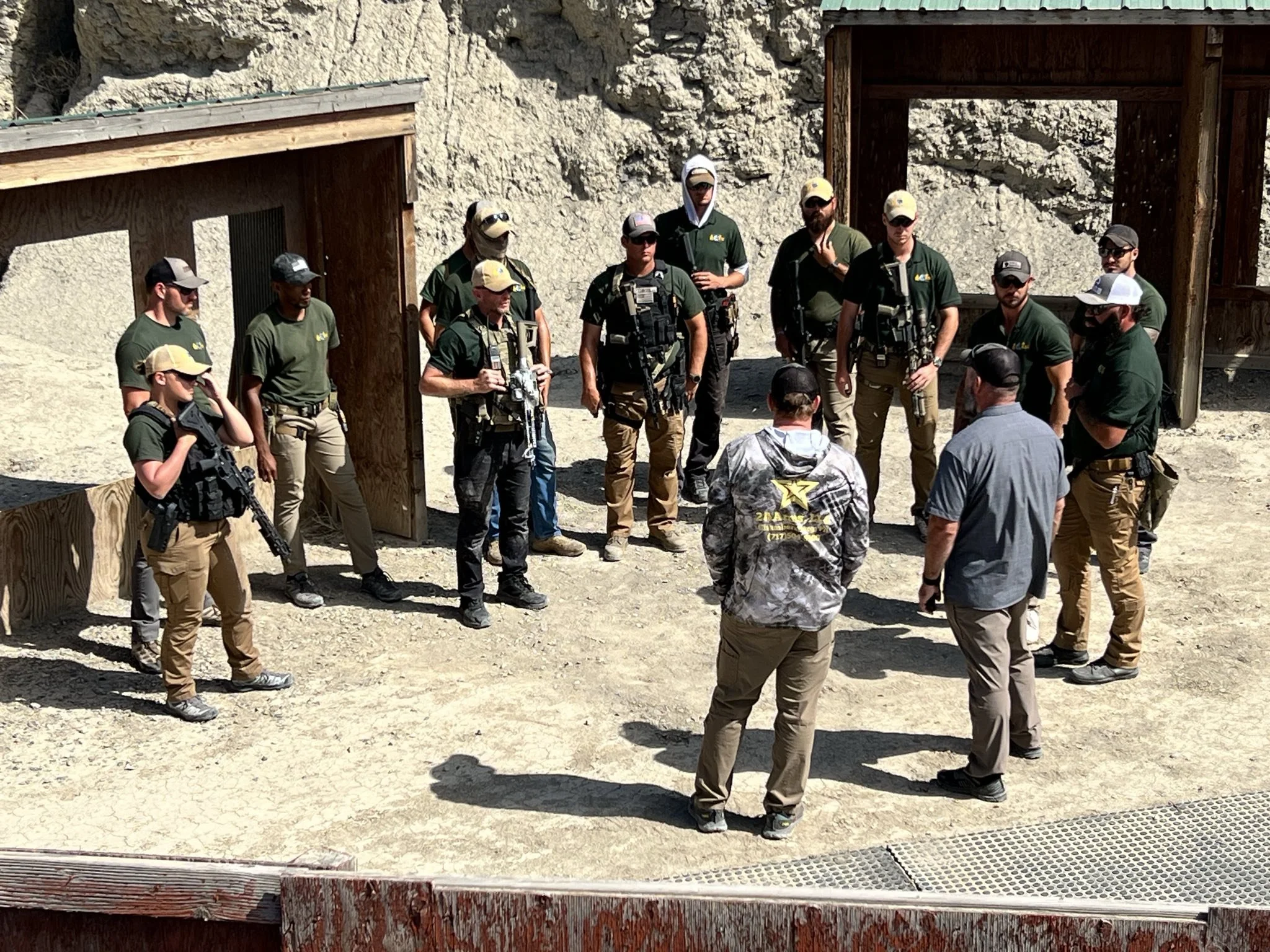
Defensive Pistol level 3 Professional
Brooks Battlegroup Defensive Pistol Level 3 Professional is an advanced course that incorporates and builds on all skills taught in Levels 1 and 2, then pushes students into more complex gun-handling, movement, and problem-solving in realistic environments. DP3 is designed to make safe gun-handling truly automatic while students learn to conquer higher-pressure scenarios, increased distance standards, and more challenging terrain and structures.
Level 3 emphasizes moving through spaces where cover is limited or absent, understanding the difference between cover vs. concealment, and navigating common real-world environments such as parking garages, hallways, stairwells, and around vehicles—while maintaining efficient weapon control and accurate hits.
Prerequisite / Performance Standard :
Must be Law Enforcement, Military, or Gov. Agency Professional. Students should be able to consistently engage an 8-inch circle at 50 yards prior to attending DP3.
DP3 Performance Standard:
By the end of Level 3, students will be working toward consistent hits on an 8-inch circle at 100 yards (distance, accuracy, and accountability emphasized).
Course Focus (includes DP1 & DP2 skills, plus advanced applications)
Advanced Gun-Handling & Problem Solving
Refinement of drawstroke, recoil control, target transitions, and performance under time constraints
Higher-level stoppage recognition and clearance, including Type 2 malfunctions and more complicated failure patterns
Efficient reloads and gun management while moving and working around obstacles
Movement Without Cover (Cover-to-Cover Problem)
Moving across open space when there is no cover available, from one point of cover to another
Movement techniques that reduce exposure time and improve stability for accurate shooting
When to move, when to stop, and how to shoot as movement demands change
Cover vs. Concealment / “Looks Safe” Obstacles
How to move around objects that appear protective but do not stop rounds (concealment)
Selecting angles, managing distance, and using structure intelligently to minimize risk
Avoiding “false cover” habits that get people hurt in real environments
Complex Environment Navigation
Techniques for moving and fighting through complicated structures, including:
Parking garages (pillars, vehicles, vertical angles, long sightlines)
Hallways and tight corridors (limited lateral movement, corners, threshold problems)
Stairwells and multi-level structures (elevation, balance, visibility)
Vehicles (using cars as partial cover/concealment, working around doors/engine blocks, movement lanes)
Who It’s For
DP3 is for motivated professionals who already have safe handling and solid fundamentals, and who are ready for advanced movement, longer-distance accountability, and decision-making in more realistic environments.
Course Details
Duration: 8 Hours (includes classroom and range time).
Capacity: Limited to 12 students for a high instructor-to-student ratio.
Cost: $529.00 per person
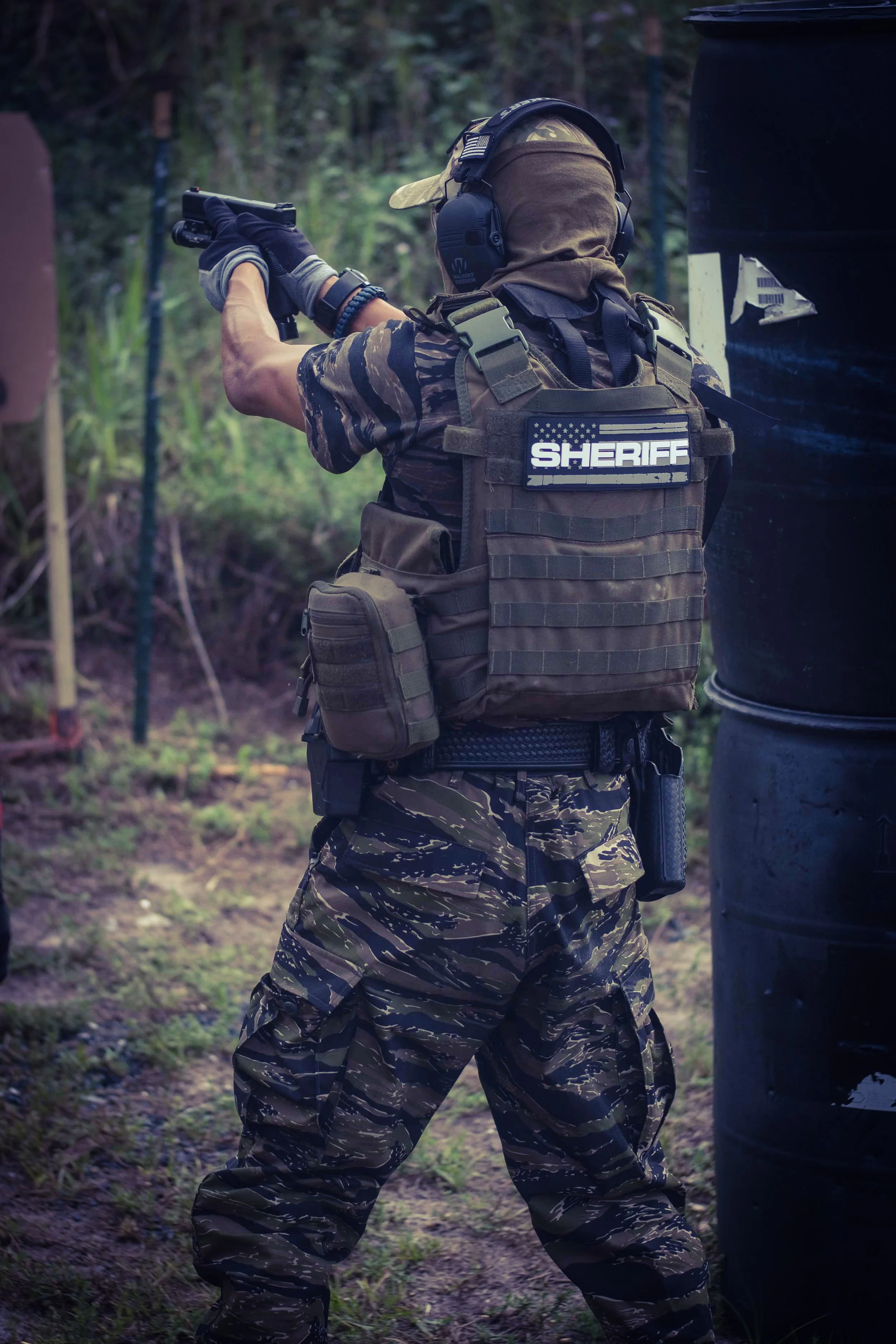
Defensive rifle level 3 Professional
Brooks Battlegroup Defensive Rifle Level 3 Professional is an advanced course that incorporates and builds on all skills taught in Levels 1 and 2, then pushes students into more complex rifle-handling, movement, and problem-solving in realistic environments. DR3 is designed to make safe rifle-handling truly automatic while students learn to conquer higher-pressure scenarios, increased distance standards, and more challenging terrain and structures.
Level 3 emphasizes moving through spaces where cover is limited or absent, understanding the difference between cover vs. concealment, and navigating common real-world environments such as parking garages, hallways, stairwells, and around vehicles—while maintaining efficient weapon control, clean presentation, and accurate hits.
Prerequisite / Performance Standard (DR2):
Must be Law Enforcement, Military, or Gov. Agency Professional. Students should be able to consistently engage an 8-inch circle at 100 yards prior to attending DR3.
DR3 Performance Standard:
By the end of Level 3, students will be working toward consistent hits on an 8-inch circle at 200 yards (distance, accuracy, and accountability emphasized).
Course Curriculum (includes DR1 & DR2 skills, plus advanced applications)
Advanced Rifle-Handling & Problem Solving
Refinement of presentation, recoil management, target transitions, and performance under time constraints
Higher-level malfunction recognition and clearance, including more complicated failure patterns (to include double-feeds and other complex stoppages)
Efficient reloads and rifle management while moving and working around obstacles
Movement Without Cover (Cover-to-Cover Problem)
Moving across open space when there is no cover available, from one point of cover to another
Movement techniques that reduce exposure time and improve stability for accurate shooting
When to move, when to stop, and how to shoot as movement demands change
Cover vs. Concealment / “Looks Safe” Obstacles
How to move around objects that appear protective but do not stop rounds (concealment)
Selecting angles, managing distance, and using structure intelligently to minimize risk
Avoiding “false cover” habits that get people hurt in real environments
Complex Environment Navigation
Techniques for moving and fighting through complicated structures, including:
Parking garages (pillars, vehicles, vertical angles, long sightlines)
Hallways and tight corridors (limited lateral movement, corners, threshold problems)
Stairwells and multi-level structures (elevation, balance, visibility)
Vehicles (using cars as partial cover/concealment, working around doors/engine blocks, movement lanes)
Who It’s For
DR3 is for professionals who already have safe handling and solid fundamentals, and who are ready for advanced movement, longer-distance accountability, and decision-making in more realistic environments.
Course Details
Duration: 8 Hours (includes classroom and range time).
Capacity: Limited to 12 students for a high instructor-to-student ratio.
Cost: $579.00 per person
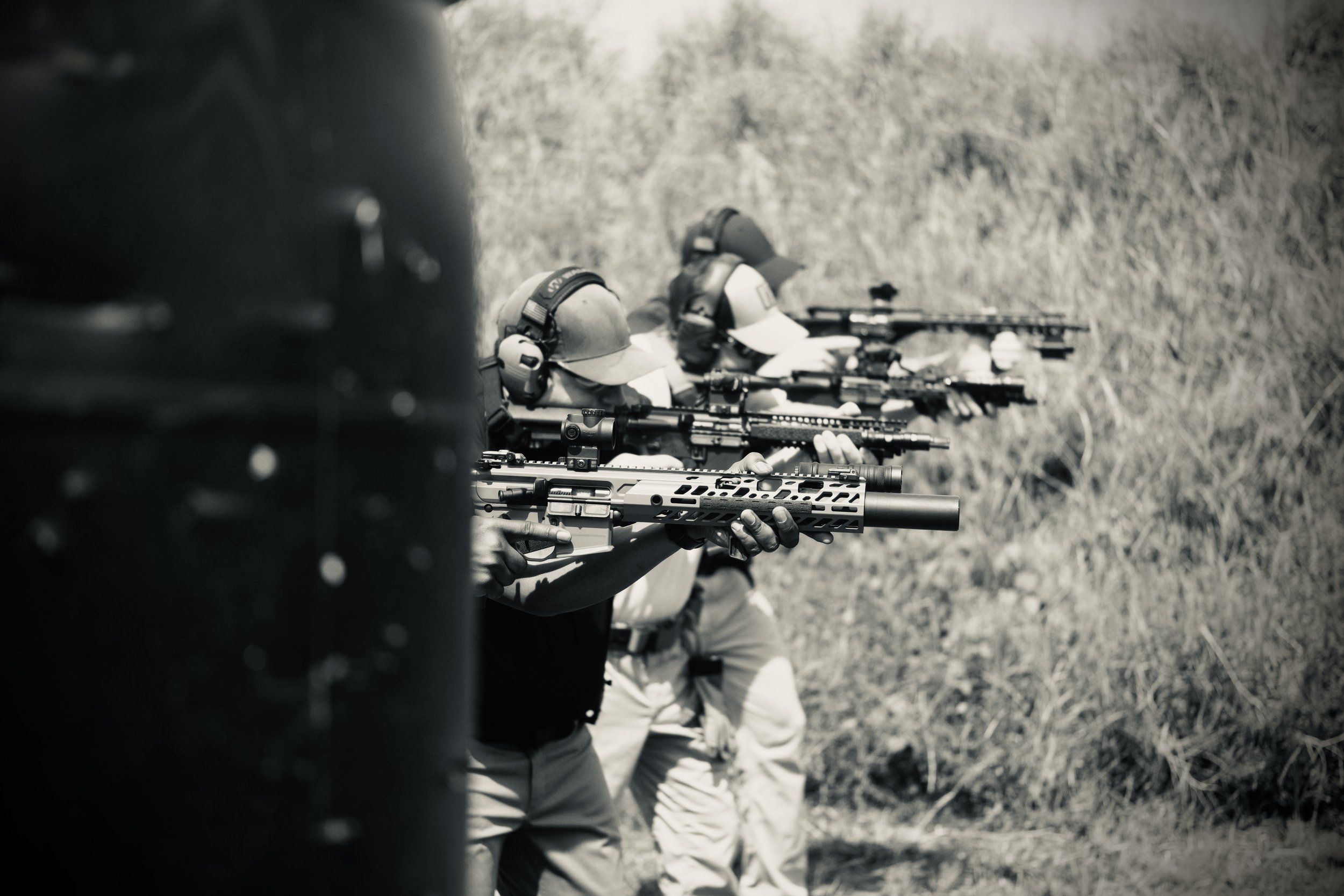
Long range employment - LE/MIL/GOV
Long Range Employment (LE/GOV/MIL) is an advanced precision-rifle course purpose-built for law enforcement, government agencies, and military/veteran personnel operating in small teams. The program reinforces the fundamentals of precision shooting and then applies them to operational problem-sets, including coordinated/controlled shots in support of direct-action or high-risk warrant service.
Students learn practical long-range fieldcraft and mission planning: urban and rural hide selection, hide construction, route planning, and disciplined ingress/egress to the final firing position. Training emphasizes team operations and control measures—communications from radio procedures down to hand-and-arm signals, target identification and deconfliction, security considerations, contingency planning, and repositioning under time constraints.
This course is intended for law-enforcement officers assigned as designated snipers on SRT/SWAT teams, government personnel needing a designated marksman/sniper capability within their unit, and military personnel seeking to expand proficiency as a designated marksman, sniper, or observer in the long-range community.
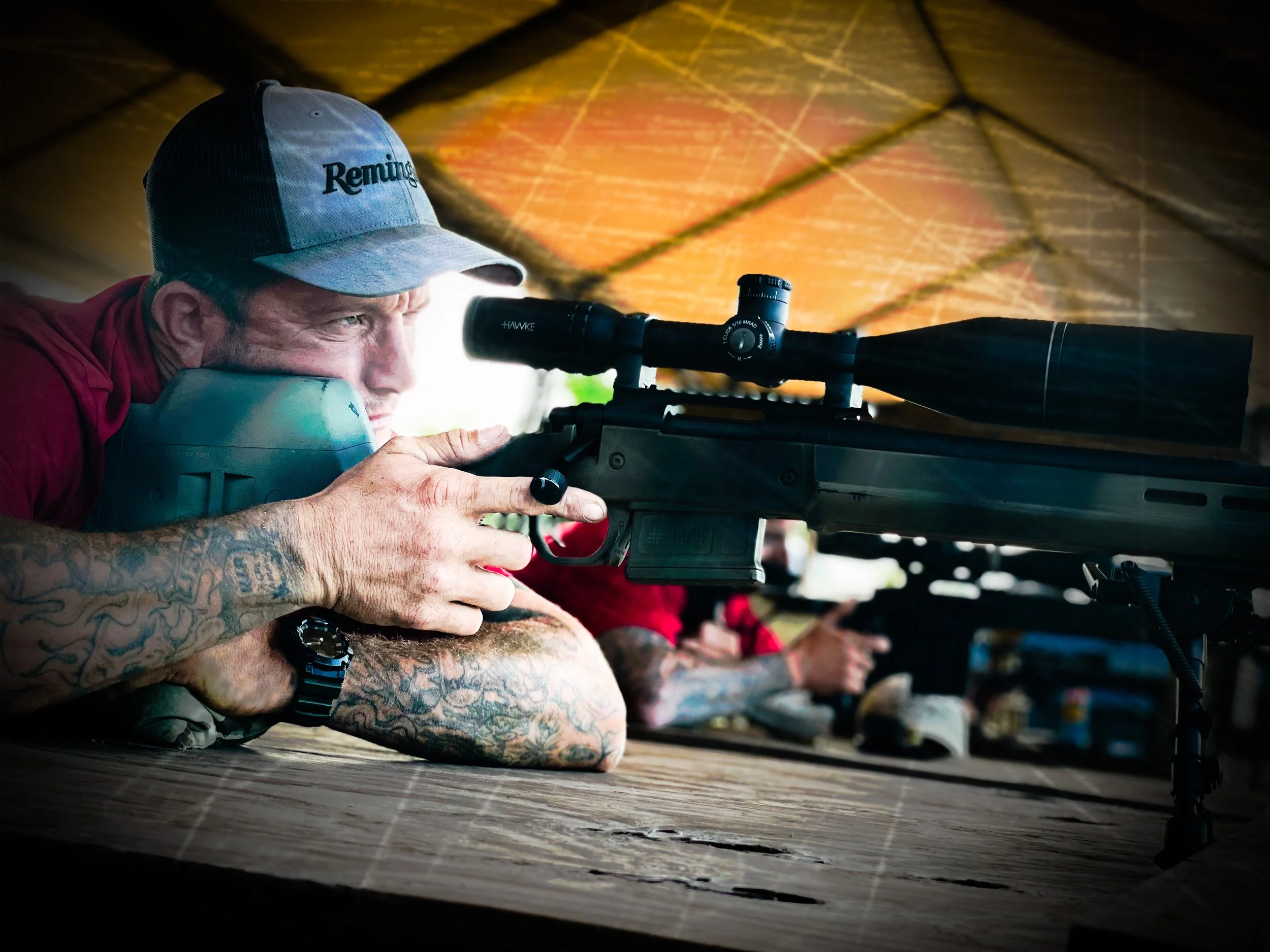
Skill Development Days
Skills Development Days are dedicated, instructor-supported practice sessions designed to bridge the time between formal training courses. These days focus on increasing meaningful reps, sharpening proficiency, and reinforcing the core concepts, foundational skills, and principles covered in your previous instruction.
These sessions are open to current clients and law enforcement, with designated dates specifically for civilians and designated dates specifically for LEOs to ensure training is relevant and appropriately tailored.
Participants will work through structured drills and performance standards to validate technique, improve consistency, and identify areas for continued growth. Just as importantly, these days create a collaborative environment to network, share insights, and train alongside fellow shooters and instructors.
Purpose: Close the gap between training sessions through focused practice and feedback.
Outcomes: More reps, better proficiency, stronger fundamentals, and stronger connections within the training community.
Get In Touch
If you're interested in training with us, complete the form with a few details about your project. We'll review your message and get back to you within 48 hours.